Why the Dholera Activation Area Is More Than Just the Tata Semiconductor Plant
When the Tata Electronics–PSMC Semiconductor Fab was announced in Dholera, it quickly became the center of attention. For many people, Dholera is now synonymous with the Tata Semiconductor Project.
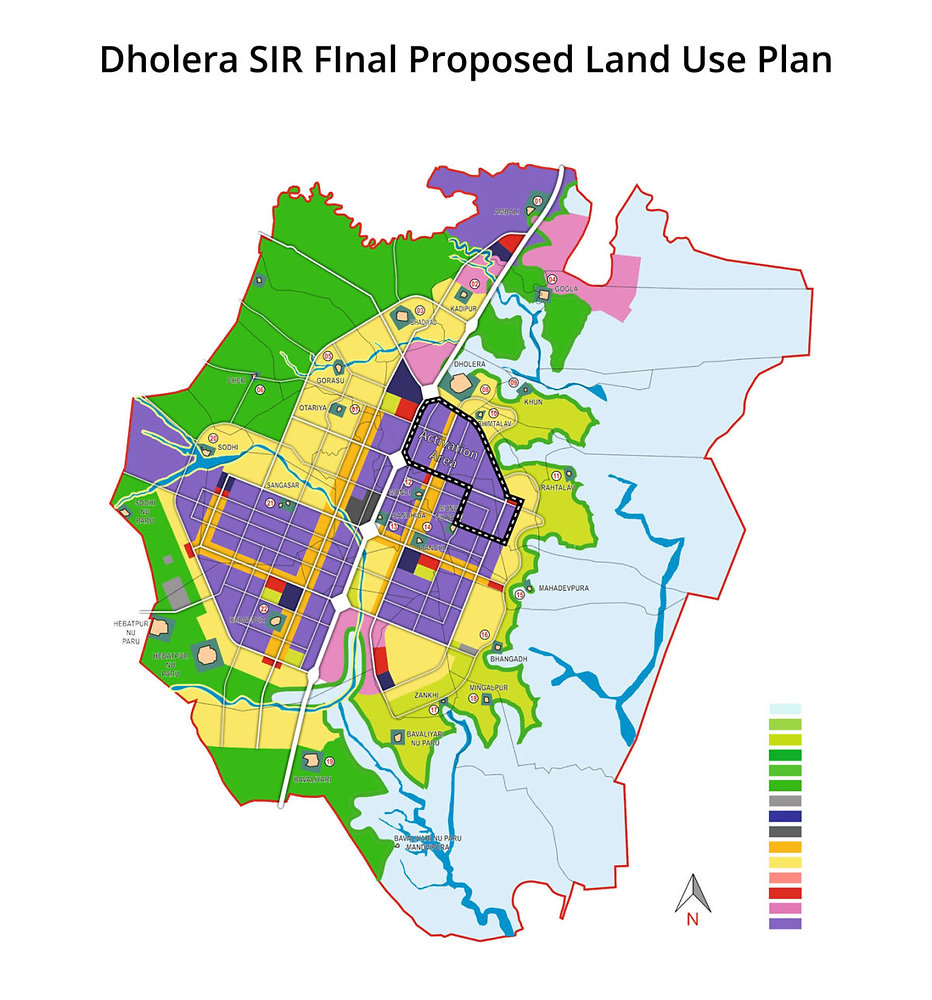
However, if you closely study the official planning of the Dholera Activation Area, you will discover a much bigger story: The Government of Gujarat is not building a single factory—it is building a complete, integrated industrial ecosystem.
✍️ Author Perspective: Written by CA Ramesh Rajaram Gurav, founder of Dholera920SqKmInfra.com, providing fact-based analysis on Dholera’s industrial planning and real estate framework.
💡 Key Takeaway
The Dholera Activation Area is not just the site of the Tata Fab plant—it is the foundation of a complete smart industrial city where power, water, environmental utilities, healthcare, housing, and supply chain industries are built together from day one.
Infrastructure First: Why Factories Need an Ecosystem
A semiconductor fabrication facility is one of the most sophisticated manufacturing units on earth. It cannot operate on land alone. It requires uninterrupted electricity, reliable water treatment, hazardous waste management, skilled labor, and an extensive supply chain network.
Traditionally, industries buy land and wait years for utilities to catch up. Dholera follows an “Infrastructure First” philosophy—investing in world-class utilities before large-scale industrialization begins so companies can plug and play seamlessly.
Core Pillars of the Activation Area Ecosystem
⚡ Power & Water Grid
- GETCO 400/220 kV transmission network
- Torrent Power distribution infrastructure
- 50 MLD Water Treatment Plant (scalable to 150 MLD)
- Mass Balancing Reservoirs & ESR network
🌱 Environmental Utilities
- 30 MLD Sewage Treatment Plant (STP)
- 60 MLD Common Effluent Treatment Plant (CETP)
- Underground utility ducts for zero-surface digging
- Planned environmental compliance zones
The Importance of Ancillary Supply Chains
A single semiconductor plant attracts hundreds of supporting businesses. Dholera has reserved dedicated industrial land for ancillary sectors, including:
| Ancillary Sector | Role in the Semiconductor Ecosystem |
|---|---|
| Precision Engineering & Gases | Provides ultra-pure industrial gases and specialized machinery tools. |
| Specialized Chemicals & Packaging | Supplies chemical reagents and clean-room packaging solutions. |
| Testing, Calibration & Logistics | Ensures quality control, calibration, and cold-chain air cargo dispatch. |
Building a Social Ecosystem for People
Industrial hubs only thrive long-term when workers and families choose to live there. The Activation Area master plan integrates key social infrastructure directly alongside business zones:
- Healthcare & Safety: Multi-specialty hospital and dedicated fire station
- Education & Living: Integrated school, residential developments, and accommodation facilities
- Hospitality & Leisure: Corporate hotels, food courts, recreation zones, Tent City, and open green spaces
📈 Why Ecosystems Matter to Real Estate Investors
Single factories can shut down, but self-sustaining ecosystems grow for generations. As anchor factories and ancillary suppliers hire thousands of workers, real demand is created for housing, retail, commercial office spaces, warehousing, healthcare, and schools—driving sustainable property value growth.
Conclusion:
The Tata Semiconductor Plant may be the headline project, but it is only one component of a much broader vision. The true strength of the Dholera Activation Area lies in its integrated planning—where power, water, environmental infrastructure, healthcare, education, and housing are engineered as one connected system.In the long run, successful cities are built by complete ecosystems, not by standalone factories.